The Green Business Lab sustainability simulation design places participants in realistic leadership contexts where they practice making integrated business decisions under real-world constraints.
It was created for one purpose: to help participants learn how to make better business decisions in a world where sustainability is a core strategic concern.
Because learning is most durable when it occurs in conditions similar to those in which it will be applied, the simulation places participants in a realistic leadership context. Research shows that memory and transfer improve when learners experience comparable levels of pressure, complexity, and consequence.
Participants step into the role of an Executive Leadership Team, charged by a Board of Directors to deliver strong financial performance while minimizing environmental impact, increasing social value, and operating with transparency and accountability.
This starting point shapes the entire experience. Sustainability is not an add-on to an existing business exercise; it is embedded in the design of the simulation itself.

The Green Business Lab sustainability simulation design places participants in realistic leadership contexts where they practice making integrated business decisions under real-world constraints.
It was created for one purpose: to help participants learn how to make better business decisions in a world where sustainability is a core strategic concern.
Because learning is most durable when it occurs in conditions similar to those in which it will be applied, the simulation places participants in a realistic leadership context. Research shows that memory and transfer improve when learners experience comparable levels of pressure, complexity, and consequence.
Participants step into the role of an Executive Leadership Team, charged by a Board of Directors to deliver strong financial performance while minimizing environmental impact, increasing social value, and operating with transparency and accountability.
This starting point shapes the entire experience. Sustainability is not an add-on to an existing business exercise; it is embedded in the design of the simulation itself.
In the Green Business Lab, sustainability is not treated as a standalone function or isolated objective. Participants must navigate how decisions interact across the organization.
As Executive Leadership Teams, participants confront familiar business pressures:
Decisions about products, operations, employees, and stakeholders are interconnected. Progress in one area can introduce trade-offs in another, requiring teams to think systemically rather than optimize a single metric.
This integrated structure reflects how sustainability challenges actually emerge in organizations — as complex, cross-functional decisions that demand coordination, prioritization, and judgment.
In the Green Business Lab, sustainability is not treated as a standalone function or isolated objective. Participants must navigate how decisions interact across the organization.
As Executive Leadership Teams, participants confront familiar business pressures:
Decisions about products, operations, employees, and stakeholders are interconnected. Progress in one area can introduce trade-offs in another, requiring teams to think systemically rather than optimize a single metric.
This integrated structure reflects how sustainability challenges actually emerge in organizations — as complex, cross-functional decisions that demand coordination, prioritization, and judgment.
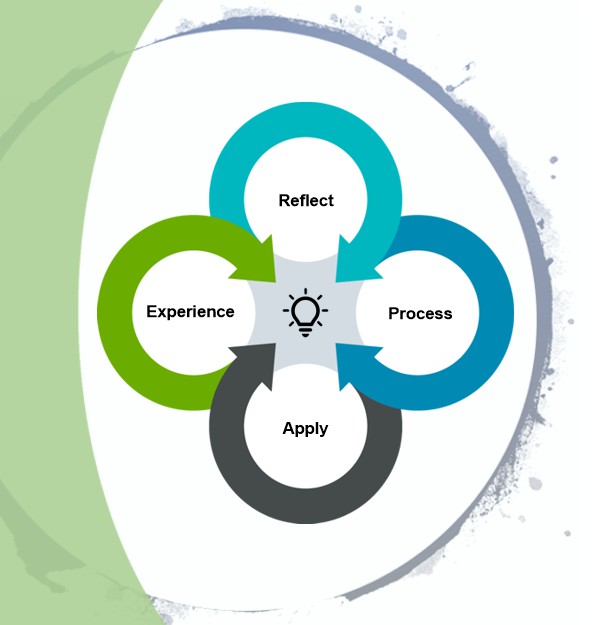
The Green Business Lab is grounded in experiential learning, combining quantitative analysis with qualitative feedback and structured discussion.
Participants design and implement strategies, bring products to market, and respond to competitive and stakeholder dynamics. They receive performance feedback that includes financial results, environmental impact, and social performance indicators.
Learning is amplified through reflection and dialogue. Teams analyze outcomes, discuss what happened, and examine both their decisions and their internal dynamics. Observing competing teams further broadens perspective, revealing how different strategies can lead to different results.
Not every insight arrives neatly in a spreadsheet. Judgment, interpretation, and conversation play a central role, reinforcing that effective sustainability leadership requires both analytical rigor and human insight.

The Green Business Lab is grounded in experiential learning, combining quantitative analysis with qualitative feedback and structured discussion.
Participants design and implement strategies, bring products to market, and respond to competitive and stakeholder dynamics. They receive performance feedback that includes financial results, environmental impact, and social performance indicators.
Learning is amplified through reflection and dialogue. Teams analyze outcomes, discuss what happened, and examine both their decisions and their internal dynamics. Observing competing teams further broadens perspective, revealing how different strategies can lead to different results.
Not every insight arrives neatly in a spreadsheet. Judgment, interpretation, and conversation play a central role, reinforcing that effective sustainability leadership requires both analytical rigor and human insight.

Sustainability is a broad and evolving field, and the simulation is designed with flexibility in mind. It is updated regularly to reflect changes in business practice and can be configured to support a wide range of courses and learning objectives.
This adaptability allows faculty to emphasize different dimensions of sustainability while maintaining a coherent, integrated experience for participants.
The simulation also supports alignment with the Sustainable Development Goals (SDGs), which are increasingly embedded in university curriculum requirements. Company decision options within the simulation are tagged to relevant SDGs, allowing faculty to explicitly connect participant choices to global sustainability goals without reducing the experience to a reporting exercise.
The result is a learning tool that stays relevant as expectations, frameworks, and the business case for sustainability continue to evolve.
Sustainability is a broad and evolving field, and the simulation is designed with flexibility in mind. It is updated regularly to reflect changes in business practice and can be configured to support a wide range of courses and learning objectives.
This adaptability allows faculty to emphasize different dimensions of sustainability while maintaining a coherent, integrated experience for participants.
The simulation also supports alignment with the Sustainable Development Goals (SDGs), which are increasingly embedded in university curriculum requirements. Company decision options within the simulation are tagged to relevant SDGs, allowing faculty to explicitly connect participant choices to global sustainability goals without reducing the experience to a reporting exercise.
The result is a learning tool that stays relevant as expectations, frameworks, and the business case for sustainability continue to evolve.


We're happy to have you join us! Subscribe & receive our latest posts in your inbox. We respect your privacy & never share your information. You can unsubscribe at any time.

